
They are also good learners, less liable to leave jobs and good at skilling up to operate robots and other machinery remotely, adding to the qualities prized in modern factories, where physical strength isn’t as big a requirement as it used to be.
“There is a preference to hire women on assembly lines,” said Lohit Bhatia, president of workforce management at leading staffing company Quess Corp. “Many automobile, EV and component makers as well as electronics and mobile manufacturers want to specifically hire women in roles that require precision work.”
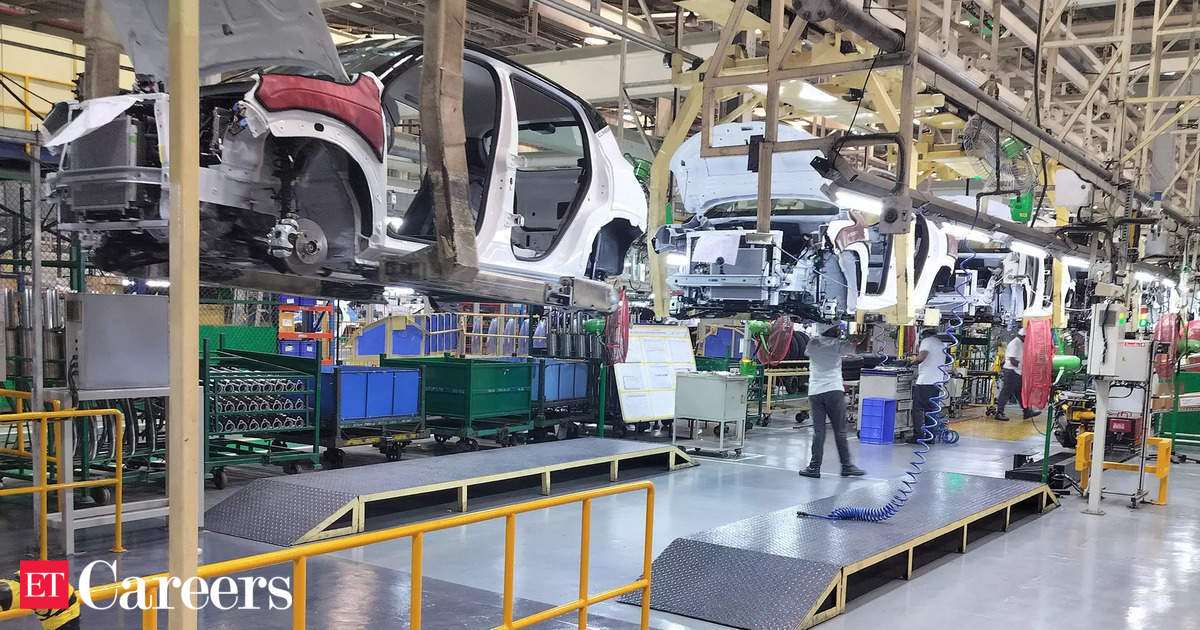
Maruti Suzuki, MG Motor and Lumax among others are hiring an increasing number of female apprentices on the shop floor.
“Our workforce encompasses women in various roles across the entire spectrum of automotive operations – from the supply chain and press shop through welding, brazing, spray painting, and assembly activities, to sales and aftersales,” said Yeshwinder Patial, senior director, HR, MG Motor India.
A strong business case for diversity
“Currently, our diversity stands at 37%. Our 50,000th car was assembled by an all-women crew,” according to MG Motor’s Patial. At auto part maker Minda Corp., women make up about a fourth of the people on the assembly line.
“With women comprising 25% of our nationwide shop floor workforce, their invaluable contributions resonate across our operational landscape,” said Ajay Singhroha, group CHRO, Minda Corp. “In particular, at our Noida plant, where precision in manufacturing smart keyless systems is paramount, women lead the shop floor operations, constituting an impressive 36% of the workforce. Additionally, our production line at the Pant Nagar plant is staffed entirely by women.” Leading auto component manufacturer Lumax has an all-women workforce soldering micro components, said MD Deepak Jain. “All electric components like PCB (printed circuit board) assembly need soldering, and this requires nimble skills,” he said.
Quess Corp’s Bhatia said women have nimble fingers and are good at work such as putting small components and parts together. “In many of the projects for auto and electronics manufacturers where we have deployed third-party staffing resources, 60-90% are women,” he said. “The common thread that runs through many of these profiles is that women are more attentive and focused in precision or accuracy.” That apart, attrition is much lower than their male counterparts, making a strong business case for companies to increase the number of women and enhance productivity. Lower attrition and better productivity are major reasons for companies to prefer women in assembly line roles, said Kartik Narayan, CEO, staffing, TeamLease Services.