
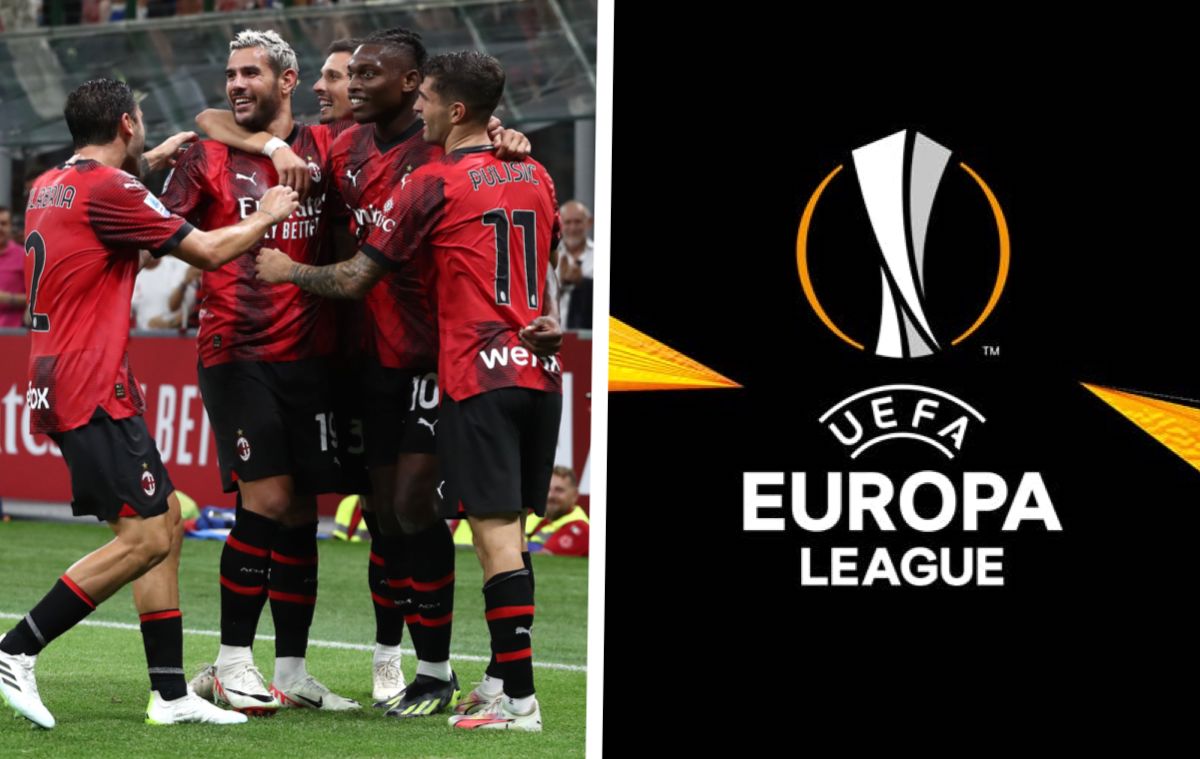
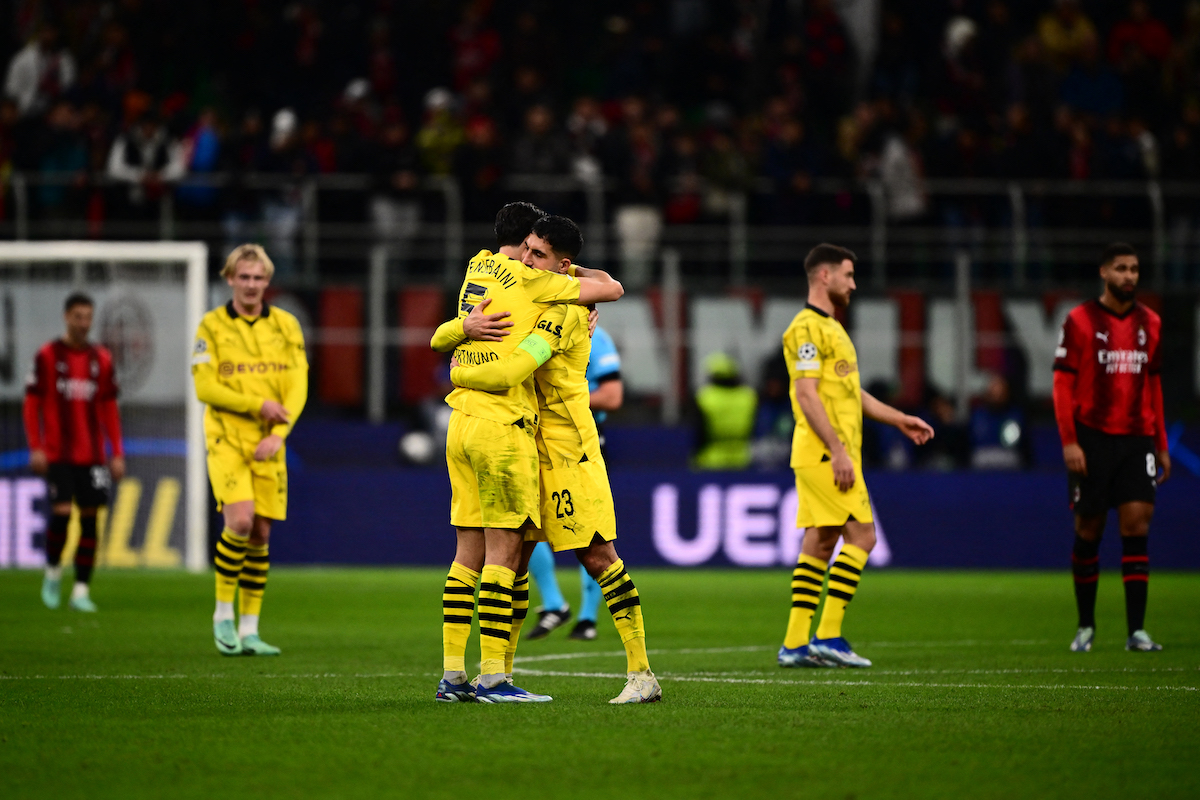
AC Milan emerged with broken bones from the match lost last Tuesday at San Siro against Borussia Dortmund. A Dr. Jekyll and Mr. Hyde match for Stefano Pioli’s team, who suffered yet another defeat through a second half collapse.
After Olivier Giroud missed an early penalty Marco Reus made no mistake when Dortmund were given one of their own, but Samuel Chukwueze got his first goal since signing for Milan to make it 1-1 going into the break.
Malick Thiaw’s injury forced Rade Krunic to come on at centre-back and that appeared to be a big turning point in the game as Jamie Bynoe-Gittens put the away side 2-1 up and then Karim Adeyemi scored 10 minutes later to make sure of the points.
The result means that Milan now have to win at Newcastle United in the final round of the group while Dortmund must avoid defeat against Paris Saint-Germain to go through. Fate is out of their hands, therefore, with regards to the Champions League.
However, Milan are in charge of their own destiny when it comes to staying in Europe, because a win at St. James’ Park would mean that they definitely stay in Europe. If PSG get a result, it will mean the Europa League.
As a club so used to glory on the biggest stage, the words ‘Europa League’ might send a shiver down the spine of most Rossoneri fans – especially given the state of the team at the moment – but there are pros and cons that must be discussed objectively.
The optimism
As mentioned, whether it is enough to stay in the Champions League depends on Dortmund-PSG, but getting third and playing in the Europe League play-offs certainly has some appeal from a financial and prestige perspective.
The first is a sporting reason though: continuing in Europe would allow the Diavolo to accumulate points in the UEFA ranking so as to avoid future draws from low pots, like happened this time being in Pot 3.
Secondly there is the financial aspect: even without winning it, getting relatively far in the competition offers up earnings very similar to those that getting to the round of 16 in the Champions League would offer, which is what Milan were aiming for
As an example, Juventus exited the group stage of the Champions League in December, reaching the semi-final of the Europa League. They collected €10m from UEFA when factoring in prize money and the market pool. Then, they also got the gate receipts for home matches against FC Nantes, SC Freiburg, Sporting CP and Sevilla which was worth another €8.6m, for a total of around €18.6m.
Winning it would be worth another €12m, including participation in the European Super Cup, as well as guaranteeing a spot in the Champions League for 2024-25 as a Pot 1 team.
Would it affect league form? That is something that must be further analysed, but Juventus reached the top four mathematically last season despite playing in the Europa League from February onwards, before their points deduction bumped them down and then the European exclusion was applied.
From a prestige point of view, Milan have never won the UEFA Cup and some would say thankfully so, given it is a competition more associated with the second club in the city, though it remains as a gap in the trophy cabinet.
Remaining in Europe and potentially getting a high-profile tie against an English club for example would also ensure greater visibility on the global stage, and exposure is something that the ownership are known to be proponents of.
This one is a bit more of a stretch to try and turn into a positive, but having additional games can actually provide a stimulus for certain players and the chance to rotate more (whatever the competition) helps keep the reserve options in game rhythm to be useful when called upon, rather than playing maybe once a fortnight.
The reality
All of the above is true, but reality must take over. Milan lost the match against Dortmund not because they were not and are not capable of playing in these big games, but because this Milan has well-known, well-established structural problems.
These were made even more evident by the injury that forced Pioli at the start of the second half replace a central defender (Malick Thiaw) with a midfielder, because there are no other defenders on the bench.
It is a Milan that has an adapted right winger on the left wing because both Noah Okafor and Rafael Leao are not on the pitch or on the bench; they sit in the stands. The only player above five goals (he has eight) in the entire squad is 37 years old and if age-related ailments were to make themselves felt, Milan would disappear, as has happened.
The starting regista (Ismael Bennacer) has been out for six months, his assistant Rade Krunic was used an adapted central defender in midweek and his assistant’s assistant Yacine Adli has played 559 minutes so far this season.
The Franco-Algerian had vanished in the weeks prior, then was thrown into the fray as a starter against Dortmund which is a questionable allocation of resources that we discussed in a separate analysis.
This Milan, to date, are not able to play in three competitions. The clearest example is given by the league and the fact that the Rossoneri, let’s face it, are looking up at Inter and Juventus rather than looking across or down at them.
The five and six points that separate Pioli’s team from Roma, Atalanta and Fiorentina seem much fewer than the same four and six points that divide Milan from second and first place. Why? Because on Saturday against Frosinone, Milan will have no Giroud, no Leao, no Okafor and one central defender in their entire squad.
The following Saturday is a trip to Atalanta and, aside from Giroud, Milan will probably have the same problems. This is the reason for this more cynical perception, the reason for this melancholy, in the hope that once again Pioli knows how to let the rabbit out of the hat.
To be fair, in the past two seasons Milan have often demonstrated that ‘you don’t live on realism alone’ and have achieved, under Pioli’s guidance, unattainable goals on paper such as the Scudetto and a Champions League semi-final, despite having almost the same problems of today.
Yet the limits cannot always be exceeded, because petrol runs out for everyone, even for those who go from ‘Out’ to ‘On Fire’. At present Pioli – and we really hope for a turnaround because that would mean the good of Milan – no longer seems able to overcome the most difficult obstacle: that of reality.
And so, back to the original point, talking about the Europa League feels like the right path to go down but only in the event that all of the ‘ifs’ come true. If you play in it you move forward, if you move forward you earn money, if you win it you earn more money and a spot in the Champions League without going through the league route, and in the summer you even get the European Super Cup. It’s a lot of steps to get right, for a team that can’t beat Udinese and Lecce.
The real need
Reality, however, tells us that this Milan has limits that for the first time in the Pioli era it is unable to overcome, limits that for the first time would do well to be clear, vivid and aware. This Milan must reach the top four places in the league, period. That is not an objective, but a primary necessity.
This is why the maximum €25m that can be obtained from participation in the Europa League would be useful, but at what price? Objectives versus necessity, limits versus miracles, dreams versus reality.
There is a reason Scaroni and Furlani continue to speak about the Champions League in the present and future tense but have not uttered the words ‘Europa League’ in any reason. The silence is deafening.