

- Report suggests GSA may be forced to pull the plug on thousands of EVs and chargers
- GSA’s biggest fleets are USPS, Dept. of Defense; 20% of its 2024 light-vehicle orders were EVs
- Could affect chargers at national parks, VA hospitals, other venues
The U.S. General Services Administration (GSA), which manages all federal government buildings and has been nicknamed by some as the largest landlord in the world, is reportedly planning to shut down its EV chargers and offload some or all of its EVs.
The move would take about 8,000 charging connectors and thousands of EVs out of service, according to a report from The Verge, citing a GSA email and a source familiar with the plans.
If so, it might amount to an exceptionally strange juxtaposition for Elon Musk. The Tesla CEO has spent years admirably facing down Tesla short-sellers on the viability of EVs and selling the public on how EVs cost less to own and use over the long run—even claiming, perhaps optimistically, at various points that Tesla’s EVs would be appreciating assets. Musk is now managing the Department of Government Efficiency (DOGE), which according to the Trump administration seeks “to modernize federal technology and software to maximize governmental efficiency and productivity.”
If running an EV and keeping electricity flowing to its Level 2 charger isn’t the technology that maximizes cost savings for the fleet over the long run, as Musk has argued for years, the Tesla CEO might need to update some of its core selling points for EVs—or have a conversation with shareholders.
The news of the charger shutdown and EV purge was first reported by Colorado Public Radio on Thursday, which reported that chargers at the Denver Federal Center were due to be shut down. The Verge then reported Friday that it had obtained the GSA email telling federal workers to begin the process of shutting down all EV chargers overseen by the agency, which is reportedly due to be formally announced internally next week.
Volkswagen, Oak Ridge National Laboratory, and UT Knoxville test wireless charging
The GSA currently operates or hosts various Level 2 AC chargers across the country, totaling about 8,000 connectors. They’re mostly there to charge government-owned EVs, but they also charge personal vehicles of federal employees, according to The Verge. Examples of charger locations seen by Green Car Reports as under GSA control that might affect public accessibility might include publicly accessible locations at national parks and VA hospitals.
Highway fast-charging infrastructure already frozen
If true, it will be the second significant impact by the Trump administration on EV chargers that were essentially already paid for. It froze EV charger funding earlier this month, pending new rules not yet released, something automakers have already rallied against. California plans to move ahead with its own EV charger buildout despite the funding freeze; it’s also promised to offer purchase incentives for most EVs (likely not including Teslas), equivalent to the current federal tax credit, should the administration eliminate that.
“As GSA has worked to align with the current administration, we have received direction that all GSA owned charging stations are not mission critical,” the email reads.
There’s nothing to directly indicate that the decision to shut down chargers comes from Tesla CEO Elon Musk. But the term “not mission critical” echoes language often used by Musk, who has been arbitrarily cutting federal spending and jobs in his role as an advisor to the Trump Administration. And, if this is overseen by Musk, it directly conflicts with the CEO’s longtime efforts suggesting that Teslas would make good public-service vehicles with lower operating costs.

Tesla CEO Elon Musk suggesting Tesla EVs cost less for patrols
Some regional federal offices have already been instructed to take their chargers offline, according to The Verge, which adds that the GSA is looking to cancel current network contracts that keep chargers operational. Once those contracts are canceled, chargers will be “turned off at the breaker,” the email reads.
The federal fleet overseen by the GSA currently includes approximately 650,000 vehicles, more than half of which were due to be replaced with EVs under a Biden administration plan. Although a fleet summary hub page has been removed, a November 2024 release from the GSA notes that it’s ordered a cumulative 82,000 EVs and installed more than 10,500 individual charging ports, with an additional 52,535 charge ports in progress. It also reported that EVs made up 20% of its light-duty vehicle orders in 2024.
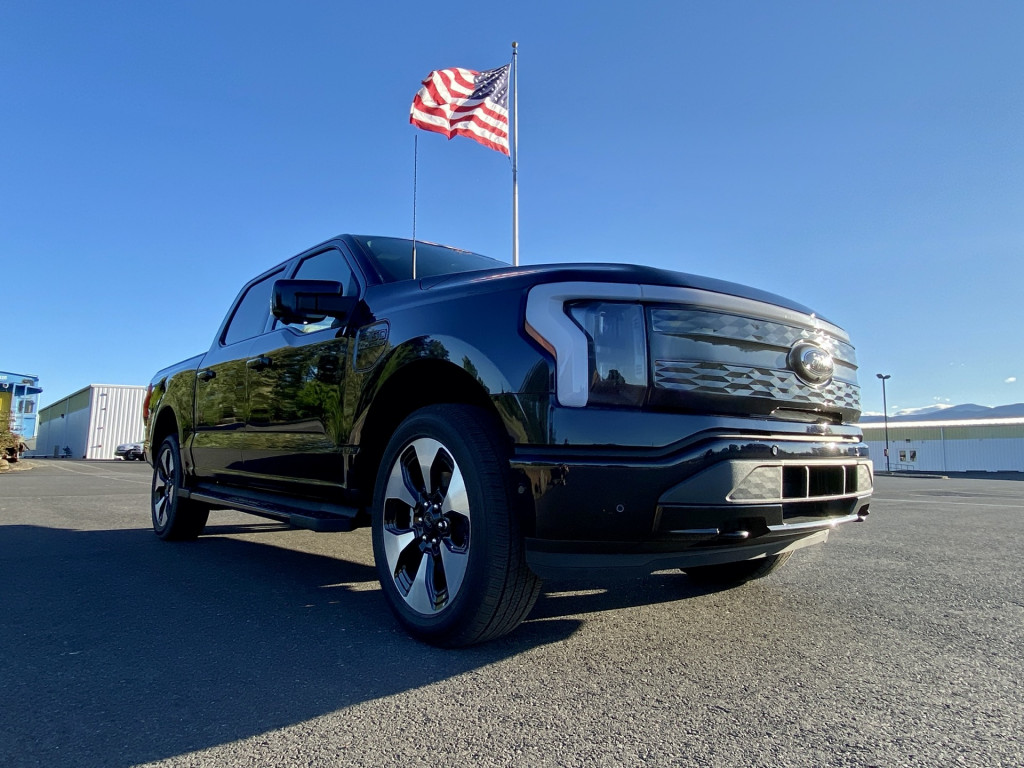
2022 Ford F-150 Lightning
The report, citing the same source with knowledge of the plan, notes that GSA-controlled facilities will stop using EVs and start offloading them, although it’s not clear whether these will be sold or stored.
Of course, chargers at facilities are essential for keeping government EVs in service. “You can’t have an electric vehicle if you can’t plug it in,” said Mark Dowd, who was the Biden administration’s director of zero emission vehicles and on the White House Council on Environmental Quality, in a 2023 podcast from the administration.
Independent of any vehicle spending, the previous administration also allocated $975 million to the GSA to upgrade federal buildings with “emerging and sustainable technologies”—including EV charging—so it’s unclear how much of that outlay it would be abandoning in doing so.
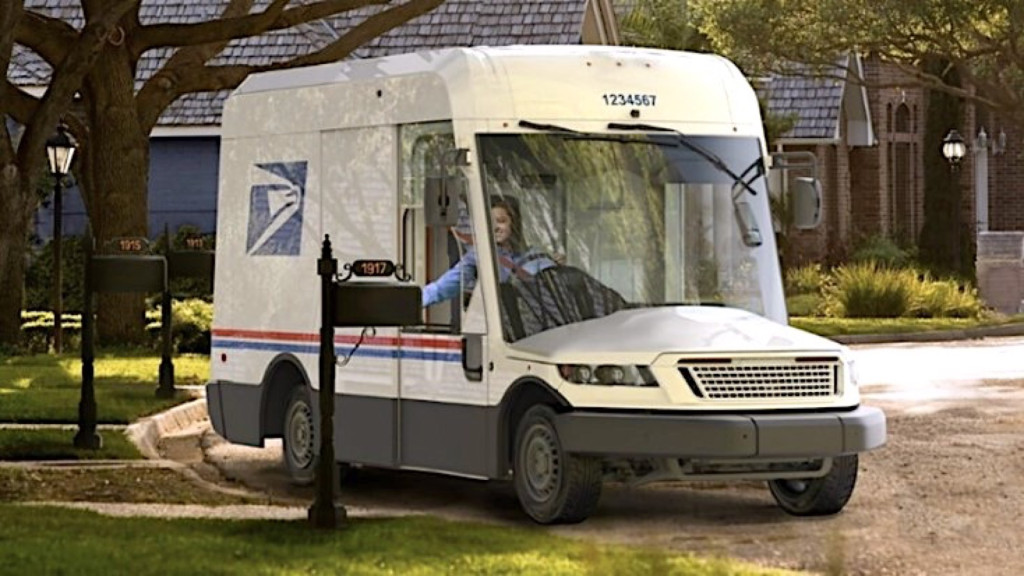
USPS Next Generation Delivery Vehicles (NGDV) – Oshkosh Defense
Fraught USPS EV order in question, again?
U.S. Postal Service vehicles comprise more than a third of the GSA fleet, and non-tactical Department of Defense vehicles make up another third. All the other federal agencies make up the other third.
Of course, this begs the question of whether the United States Postal Service (USPS) will take delivery of as many EVs as anticipated, after a debacle that led to a plan to purchase mainly gasoline vehicles. The federal government currently has tens of thousands of EVs in use, and it planned to replace more than half of its approximately 650,000 vehicles with EVs.
GSA either helps buy vehicles for agencies or leases them to agencies, depending on the situation. Under a Biden executive order, GSA was transitioning to all-electric vehicle purchases by 2027. GSA replaces a small percentage of its vehicles annually; vehicles haven’t been pre-emptively replaced with EVs, rather as gasoline models reach the end of their service life. Examples include a push to switch National Park Service vehicles from gasoline F-150 trucks to Ford F-150 Lightning models on an ongoing basis.
GSA keeps vehicles in use a long time, according to federal data, and in many cases well into high mileage, which seems like an ideal use case for EVs. According to its own current standards, the minimum life cycle for replacement of electric trucks, for instance, is seven years or 90,000 miles. Many vehicles in the GSA fleet are much older.

Tesla website promoting savings over gasoline vehicles – Feb. 2025
Musk has spent much bandwidth on EVs as smart money
As Tesla CEO Elon Musk has repeatedly emphasized over a span of more than a decade, and as Tesla’s very own site has aggressively pushed this as a built-in part of its pricing, EVs cost less to run—not just to fuel, but to own and maintain. According to Tesla the Model 3, for instance, has a five-year gas savings of $5,000 based on 10,000 miles a year or $7,500 based on 15,000 miles a year (with Los Angeles as the location). Longer maintenance intervals on EVs, including items like brake pads and fluids, mean preventative maintenance costs are far lower.
If Musk is at all behind this, it leads to a bigger question: If the chief cost-cutter and efficiency master doesn’t actually believe that EVs are cheaper and more efficient for the government to be running daily—or can’t convince President Trump that they are—will Tesla continue to sell its own vehicles on that premise?
–with reporting by Stephen Edelstein and Bengt Halvorson