
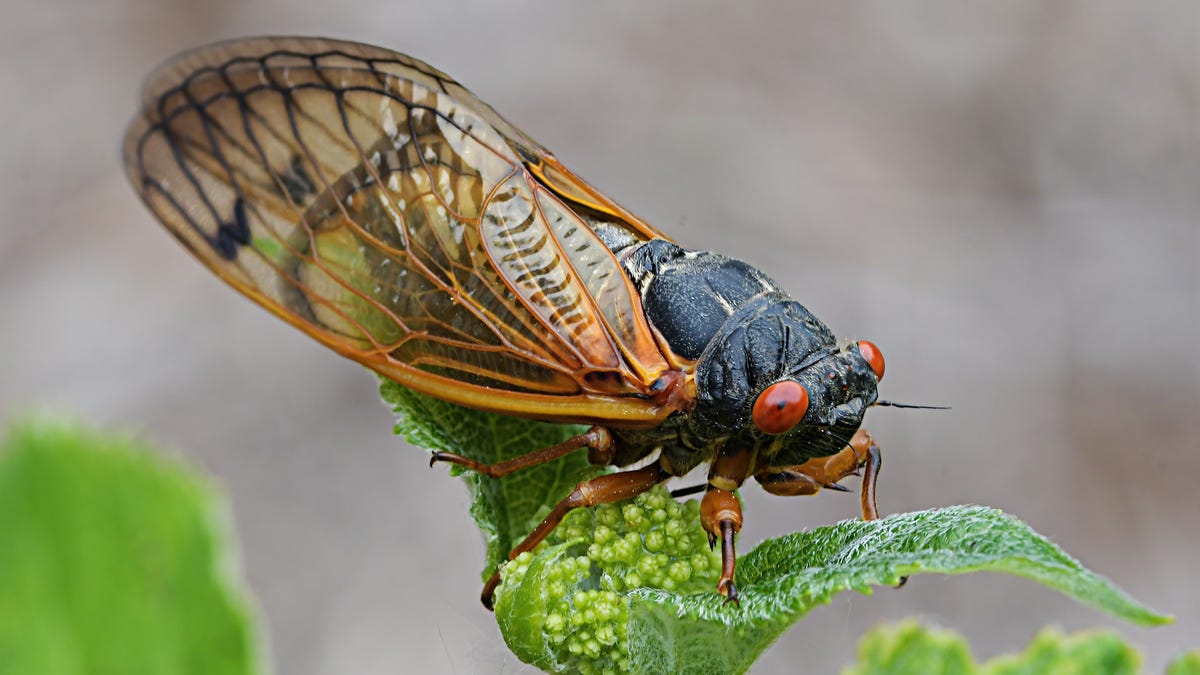
Cicadas have been annoying for as long as I can remember. The first time I remember them showing up in Maryland was when I was a teenager. Big, noisy bugs with red eyes, and they were absolutely everywhere. I remember cicadas invading everything with that incessant noise — everywhere from my grandparents’ pool, to the inside of my best friend’s truck, flying into windows and doors. However, the fact that they take over the trees isn’t the biggest problem with cicadas. The bigger issue is the skull-throbbing noise they make, which just doesn’t seem to stop. Their constant shrill buzz can be as loud as a chainsaw. As someone who can’t deal with a lot of noise and gets overstimulated, I find a quality pair of noise-cancelling headphones to be a lifesaver to help me drown out the cacophonous racket.
We’re just past the thick of cicada season brood XIV (14) now — which ran from May through June, but these noisy bugs are still around. Every few years, they tend to climb up from the ground and swarm in several eastern states before they mate, die off, and disappear again. Brood XIV won’t appear again after this year, until 2037.
We usually expect cicadas to be the reason for noise complaints throughout the beginning and middle of summer, but 2025 is going to see even more of those. This year, we’re seeing The Greater Eastern Brood, which is gigantic, with billions of these flying bugs emerging. Billions! It’s the oldest brood in the US, and it has hit 13 states, including Tennessee and Georgia, where they’re currently being spotted — or heard.
Don’t bug spray cicadas. Do this instead (sorry)
The red-eyed bugs of Brood XIV, which will soon emerge by the millions. The cicada chasers are ready.
Your immediate reaction to cicadas might be to try and eliminate them from your yard. We don’t recommend it. Cicadas are a temporary pest and after a few weeks they’ll disappear back underground. They aren’t a threat to humans at all and they aren’t able to chew their way into the house like termites.
Additionally, pesticides don’t work well on cicadas. Trying to spray them down won’t do any good and could instead damage your yard or local pollinators. The best thing to do is to try to ignore them until they finish their life cycle.
The bigger problem for some people is the constant noise that cicadas make while they are above ground. It’s a relentless buzz and, once the cicadas arrive, it won’t stop until they die off again. If the never-ending noise drives you bonkers, grabbing a quality pair of noise-cancelling headphones can make a major difference to your quality of life — or at least to mine. Really.
Why are cicadas so loud?
Here’s what’s happening: Male cicadas make noise to attract females they can mate with — the more cicadas in an area, the louder it will be. Noise levels have reached more than 100 decibels in some areas, which means if you plan to spend time in the garden, it’s a good idea to snag some earplugs to protect your hearing.
Wait, what are cicadas again?
Cicadas are also known as “true bugs” and emerge on a 13-year or 17-year cycle.
Cicadas are flying bugs that emerge from the ground periodically to mate and then disappear again. They measure 1 to 1.5 inches long, with wings that stretch twice that length. Their bodies are black, with red-brown eyes and orange veined membranous wings.
There are 15 broods of cicadas and each has its own life cycle, generally either 13 or 17 years. Brood XIV, the cicada brood emerging in 2025, is a 17-year brood. That means the last time we saw this particular band of insects was in 2008.
How many cicadas are expected in 2025?
The 2025 brood is also called the Greater Eastern Brood and it’s the second-largest brood of periodic cicadas. They’re outdone only by Brood XIX, aka the Great Southern Brood, which emerged in 2024. While there aren’t exact numbers on how many cicadas we can expect this year, we do know that Brood XIV is massive.
It’s also one of the oldest broods in the US. This particular brood was first spotted in Plymouth, Massachusetts, in the 1600s, and it’s the brood that spawned all the other 17-year broods. With that in mind, we can estimate that at least several million in certain areas, and possibly over a trillion total cicadas will emerge in 2025.
Which states will be affected by cicadas in 2025?
Each cicada brood has its own geographical location, which means they don’t all appear in the same place. In 2025, there are 13 states that will be affected; Georgia, Indiana, Kentucky, Maryland, Massachusetts, New Jersey, New York, North Carolina, Ohio, Pennsylvania, Tennessee, Virginia and West Virginia.
Do I need to protect my trees from cicadas?
While cicadas aren’t harmful to people, that same doesn’t go for trees. Female cicadas like to lay their eggs on trees where new leaves are located, which can damage branches and cause withering and snapping. While mature trees should be able to withstand this damage without problems, younger trees can be vulnerable and should be protected.
Cicadas are a nuisance but they’re here for a good time … not a long time.
If you’re worried about cicada damage, you have a few options. You can wrap tree trunks and areas where twigs meet branches with cheesecloth, tape and even use landscaping nets around smaller trees. A CNET guide from 2021 explains more about how you can protect trees from cicada damage.
When do cicadas appear, and how long do they stick around?
While cicadas are a serious pest when they arrive, they don’t last long. They’ll mostly emerge in May and then stick around for 5 to 6 weeks before they die off. By mid-summer, just in time for the Fourth of July, the cicadas should be gone or at least on their way back underground for another 17 years.
Cicadas emerge when the soil 8 inches below ground reaches 64 degrees Fahrenheit. Above-ground temperatures will need to reach the 70- to 80-degree range before the soil will warm up enough, although a warm rain can warm the ground faster. There already have been sightings in Tennessee this year but most of the brood probably won’t arrive for a few more weeks.
Can you eat cicadas?
Cicadas can be eaten but there are things you should know before cooking them.
The simple answer is, yes. Cicadas can be eaten and people have been doing it for centuries.
Native American populations, like the Onondaga Nation, have long viewed the flying insect as a valuable food source. However, eating cicadas does come with risks. Cicadas are related to shrimp and lobster, which means eating them is not recommended if you have a seafood allergy.
Cicadas aren’t dangerous to pets either, which means if your dog snacks on cicadas it should be fine.
Cicadas and climate change
For centuries, cicadas have slept underground, emerging only once every 13 to 17 years to mate before disappearing again. While plenty of research has been done on these flying insects, cicadas react to the temperature around them and emerge on a schedule that is triggered by the warmth of the ground.
As the planet continues to heat up, the timing of cicadas has started to change. We may soon see a significant change in the life cycle of cicadas. As the temperatures rise, 17-year cicadas could become 13-year cicadas, changing the timeline on when we will see them.
While cicadas might be inclined to move further north, it’s not an easy process. They can only migrate during their above-ground cycle of life. Because they only emerge for a few weeks at a time and aren’t prone to flying long distances, any shift in their geographical locations would occur slowly during their emergences.
How you can help cicada researchers
Snap a photo and help researchers learn more about cicadas.
Researchers spend time with each brood when it emerges to study its life cycle and track when and where they emerge. However, scientists don’t have the time or resources to be everywhere that cicadas appear.
That’s where regular folks come in.
Cicada Safari is a free app for Android and iOS that lets you take photos of cicadas and upload them to the app. Using geolocation on those uploaded images, scientists can track a larger number of cicadas. Your photos of these flying bugs in your backyard can help scientists to understand them better, filling in holes in their research.