
Move over taste testers, there’s a new contender in the world of flavour evaluation — and it’s made out of circuits and sensors.
And eventually, scientists say the technology could be used to find contaminants in foods that could make consumers sick, or detect when something is no longer safe to eat.
Researchers from Penn State in Pennsylvania have developed an electronic tongue that identifies differences in similar liquids, such as milk with varying water content, and products like soda types and coffee blends. It can even distinguish between Pepsi and Coke with a high degree of accuracy.
The research, published Wednesday in Nature, found the AI tongue is capable of detecting, classifying, and assessing the quality and freshness of different substances. This means that if milk is contaminated, the tongue may be able to detect it.
“We’re trying to make an artificial tongue, but the process of how we experience different foods involves more than just the tongue,” said corresponding author Saptarshi Das, professor of engineering science and mechanics at Penn State.
“We have the tongue itself, consisting of taste receptors that interact with food species and send their information to the gustatory cortex — a biological neural network.”
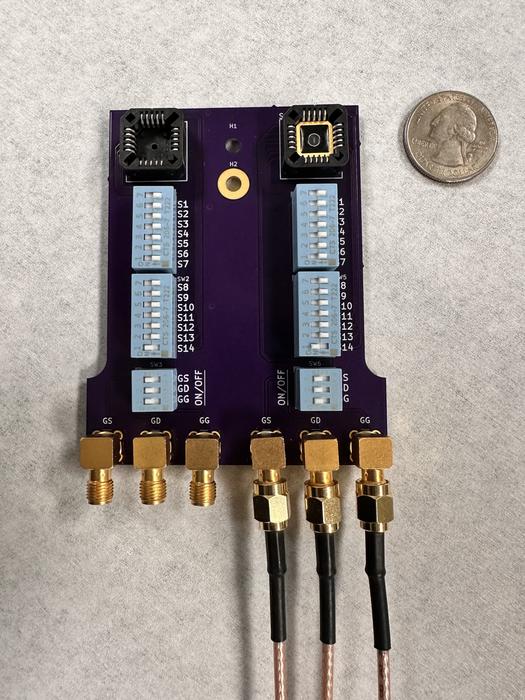
The electronic tongue comprises a graphene-based ion-sensitive field-effect transistor, or a conductive device that can detect chemical ions, linked to an artificial neural network, trained on various datasets. This is located in the top right of the device.
Saptarshi Das Lab/Penn State
The gustatory cortex, located in the brain, perceives and interprets tastes beyond the basic sweet, sour, bitter, salty and savoury categories detected by taste receptors, the researchers explained. As the brain becomes more familiar with these tastes, it becomes better at detecting the subtle nuances between different favours.
The researchers aimed to replicate the function of the gustatory cortex by developing a machine-learning algorithm designed to mimic it.
Get weekly health news
Receive the latest medical news and health information delivered to you every Sunday.
The AI tongue is made up of graphene and chemical sensors. The chemical sensors detect and measure the chemical makeup of liquids (such as carbohydrates, proteins, lipids, acids and vitamins) and convert the information into electrical signals, the researchers said.
The neural network was trained on different datasets and given 20 specific tasks to learn. These tasks were about how liquids affect the sensors’ electrical properties.
The AI tongue accurately detected samples, including watered-down milk, different types of sodas (diet Coke, Pepsi, Coke Zero Sugar), blends of coffee (espresso, breakfast, Italian) and multiple fruit juices at several levels of freshness. The researchers reported it could accurately decipher the content in about a minute, with over 80 per cent accuracy.

For the fruit juice, the AI tongue achieved accuracy values of approximately 98 per cent for identifying the type of fruit and 99 per cent for determining its age.
“After achieving a reasonable accuracy with human-selected parameters, we decided to let the neural network define its own figures of merit by providing it with the raw sensor data,” said co-author Andrew Pannone, a doctoral student in engineering science at Penn State.
“We found that the neural network reached a near ideal inference accuracy of more than 95 per cent when utilizing the machine-derived figures of merit rather than the ones provided by humans,” he said in the media release.


By using this AI tongue to accurately detect subtle differences in liquids, potentially beyond human perception, the sensors could be applied to identify harmful contaminants in food, such as PFAS (a toxic chemical), and to monitor food freshness, like tracking juice quality over several days, the researchers argued.
“Although corrective actions exist for food adulteration and contamination incidents, monitoring food freshness is more challenging because of time-varying and complex chemical compositions present in food. Spoilt food is dangerous to consume and possesses a diminished nutritional value,” the study stated.
The authors emphasize that timely detection of harmful contaminants in food production and distribution remains an ongoing challenge. For example, hazardous PFAS are widely used in industrial processes and present in consumer products, with the potential to accumulate in the environment, including drinking water.
PFAS, known as “forever chemicals,” are a group of thousands of long-lasting, human-made chemicals that are used in textiles, cosmetics, furniture, paints, firefighting foams, food packaging and other commonly used consumer products.
Exposure to certain PFAS is associated with reproductive, developmental, endocrine, liver, kidney and immunological effects, according to Health Canada.
However, the AI tongue shows promise for accurately detecting PFAS in water, offering a potential solution to this issue.

“We believe that miniaturized graphene-based technology, enhanced by a suite of machine learning methodologies, can serve as a cost-effective platform for a wide range of chemical sensing
applications in the food supply chain and beyond,” the authors state.
The researchers note that the AI tongue’s capabilities are limited only by the data it is trained on. While this study focused on food assessment, its potential applications could extend to areas like medical diagnostics as well.
“These results highlight that machine-learning-aided graphene ISFETs (ion-sensitive field-effect transistors) can be applied to tackle a broad spectrum of challenges in the food industry,” the researchers said.
— With files from Global News’ Saba Aziz