
Editor’s Note: This article contains graphic descriptions of the effects of the atomic bomb.
I was angered and dismayed by Jerry Saltz’s August 6 Instagram post on the 80th anniversary of the American atomic bombings of Hiroshima and Nagasaki. The New York Magazine art critic trotted out the tired rationalization that the bombings were the only way to end World War II. In his view, the Japanese military was so hell bent on “national death” that it had to be met with an equally totalizing show of force. “There was no real alternative,” he asserted.
The bluntness of this statement sends chills down my spine, giving rise to much outrage and many questions (as it did, judging from their comments, for over a thousand of Saltz’s followers). Why did Saltz feel compelled to weigh in on this issue? I’ll never tell a critic to stay in their lane — goodness knows, I’m out on a limb here myself — but wasn’t this perhaps a moment that merited a little more self-reflection? His claims parrot nationalistic, American propaganda as historian Paul Ham has characterized it, rather than looking at the bigger picture.
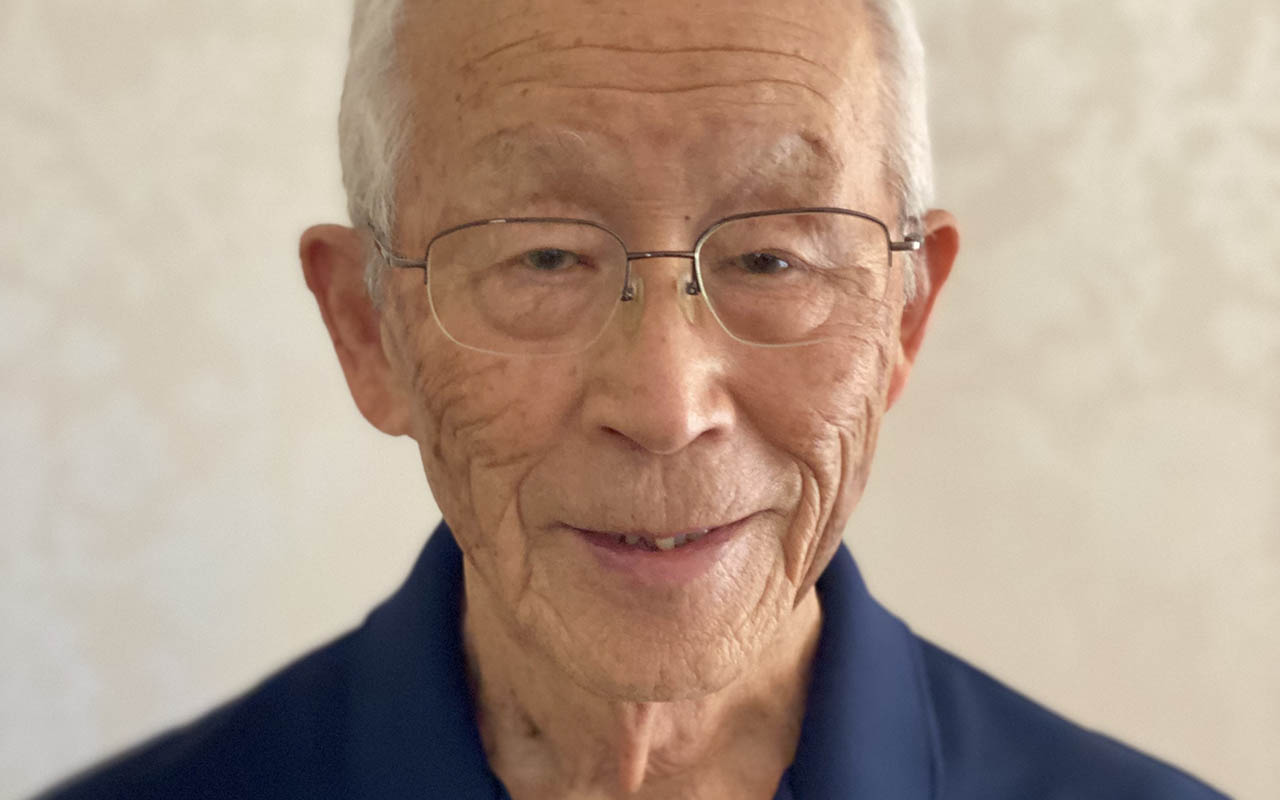
For some perspective, I reached out to a friend of my father’s, Howard Kakita. Kakita is a hibakusha, a survivor of the atomic bomb. Saltz wrote that the bombings were “acts of mass death and unimaginable suffering,” but for Kakita and other hibakusha, such suffering is anything but unimaginable. It is still as clear as the summer sky was over Hiroshima on August 6, 1945.

That morning, the seven-year-old Kakita and his older brother Kenny had climbed onto the roof of their paternal grandparents’ house to watch the vapor trails of the B-29 bombers that regularly crisscrossed the sky. Their grandmother yelled at them to get down, and Kakita ducked into the bathhouse, a separate structure alongside the main building. The next thing he knew, he woke in a pile of rubble. Digging himself out, he found his neighborhood flattened and ablaze. His grandparents and brother fortunately survived, but he vividly remembers the horrors all around: the many corpses lying in the street, dying people crying desperately for water, others with broken bones jutting through their skin, or whose skin was burned so badly it dripped from their bodies. One person’s guts dangled from their belly. He later learned that his maternal grandparents died in the blast.
For a long time afterwards, the air was filled with the stench of bodies being cremated. Kakita and his family struggled to survive in a city that had been totally flattened and was still radioactive. They suffered from dysentery and radiation sickness; all of their hair fell out. Kakita lost his grandfather to cancer and regularly woke up screaming from nightmares. He had trouble eating anything red because it reminded him of flesh and blood. Years later, when he was getting married, he warned his fiancée that he might not live very long, and when his first child died at the age of five from cancer, Kakita was haunted by the thought that his early exposure to radiation might have played a role.

Now 87, he has spent his retirement as an anti-nuclear activist, sharing his story as a member of the American Society of Hiroshima-Nagasaki A-Bomb Survivors, in hopes of convincing others that the terrible suffering he experienced should never be repeated. When I asked what he thought of Saltz’s post, he quietly said, “I don’t think there’s any kind of justification for the dropping of the bomb.” He said there were alternatives, that the bombing resulted from a failure of leadership in both Japan and the US. He also refuted the argument that the decision saved “over a million” lives, as Saltz claimed.
“General MacArthur, head of the Allied forces, knew that Japan was done for,” Kakita said. “They had no army; they had no navy; they had no air force. Would he ever commit a million troops to invade the mainland of Japan under those circumstances?” He also questioned the decision to drop the bomb on a civilian population: “Could they not have dropped it on some remote island just outside of Japan to demonstrate its capability? Why would they pick Hiroshima’s center, where the major population was civilians?”
I suggested it was racism, that it was easier for Americans to decimate Japanese lives abroad when they routinely denied their humanity at home. Kakita acknowledged it was a factor.

“There’s always been animosity towards Asians, Asian Americans, even without the war,” he said, adding that the conflict had delayed a planned reunion with his parents and younger brother because they were incarcerated by the US government in an American concentration camp in Poston, Arizona. “I guess I had all the bad parts of being a Japanese American,” he said.
If nothing else, it’s the lack of empathy that rankles most when I read Saltz’s post. As a fellow art critic, I understand what we do as an endeavor to stay in touch with what makes us human — all of us. Of course, not everyone sees it that way. Criticism has advanced imperialist and white supremacist viewpoints as much as it has reminded us of our common humanity, and our public discourse is only becoming more divisive and reactive. Although Kakita is buoyed by the fact that the world has not seen another atomic attack, he expressed disappointment that nuclear weapons and brinkmanship have only proliferated, despite his and others’ efforts. “Unfortunately, the world, I don’t believe, has gotten any safer,” he said.
“The big question is: How do you turn this thing around? And I think the answer lies in the younger people,” he added. “As we old people fade away, hopefully the younger population will take hold of the lessons learned from Hiroshima and Nagasaki, and maybe they’ll have a better sensitivity when they become leaders.”